A rebrand doesn't go live when the new logo is approved. It goes live when the last employee stops handing out the old one.
That gap between the launch date on the plan and the day your brand is actually consistent in the market is where most rollouts lose momentum. This is a guide to closing it: what a brand rollout strategy has to account for, why the employee-facing layer is the piece that slips, and how to get a new identity onto every touchpoint at once instead of chasing it person by person for a quarter.
Why the rollout is harder than the redesign
The creative work of a rebrand has an owner, a budget, and a deadline. The rollout usually has none of the three.
Companies are rebranding more often, not less. 73% have refreshed their brand in the last two years, and Gartner projects that by 2028 over 80% will make significant changes to their identity to keep pace with AI's impact on their markets. Every one of those changes has to reach the people who represent the brand every day, and that's where the plan runs out of road.
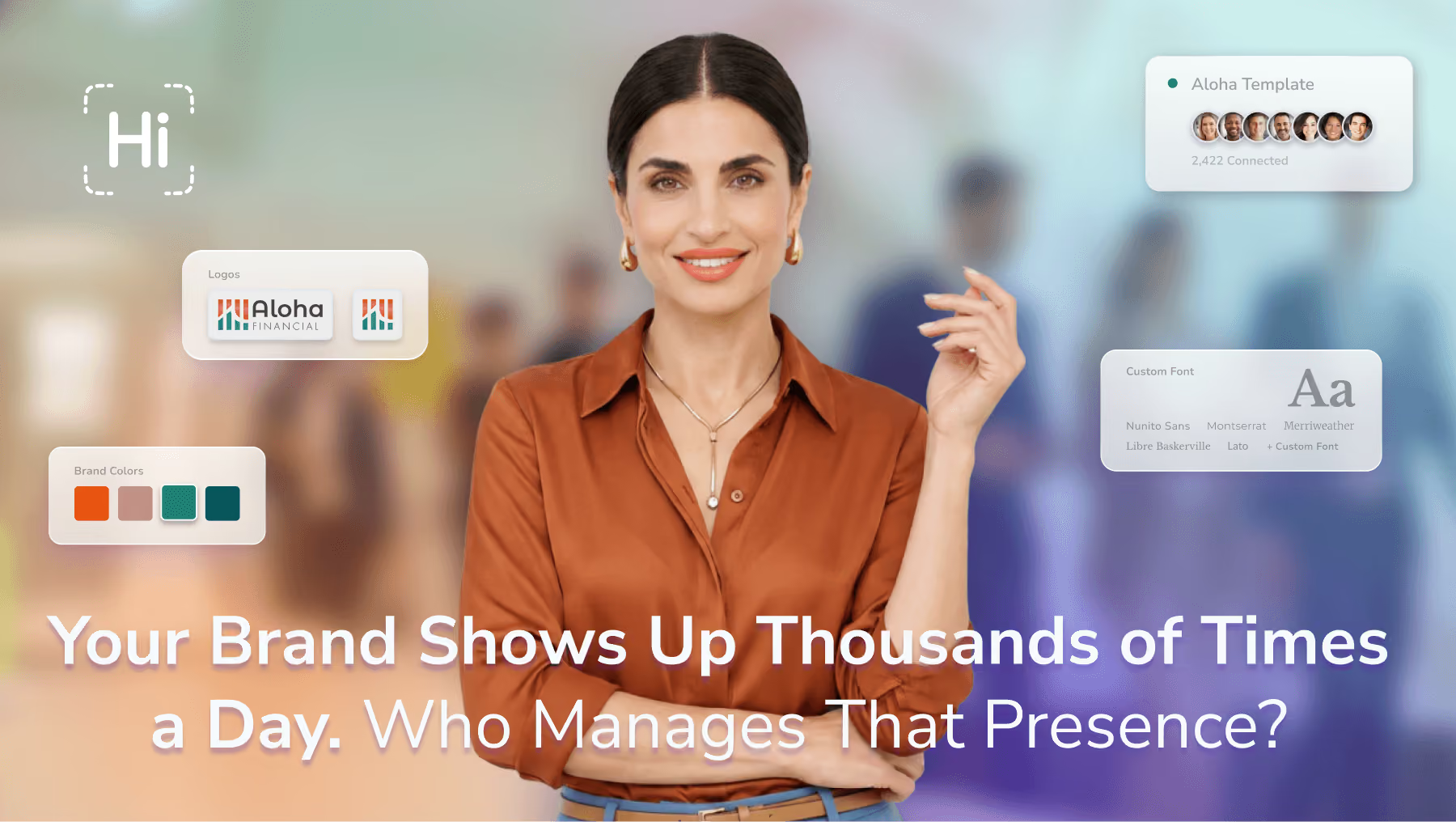
Think about what "the brand" actually is once it leaves the style guide. It's the card a rep shares at the first conference after launch. It's the signature on every sales email. It's the face (and background) on every video call. It's expressed through your people, thousands of times a day, and on launch day, most of it is still showing the company you used to be.
For a merger or acquisition, the problem compounds: two employee populations, two brand standards, and one deadline to get the acquired company's people presenting under the right brand.
What a brand rollout strategy has to cover
A rollout plan that only covers design assets is only covering the easy half. The employee-facing layer needs the same rigor. Three things decide whether it lands.
1. Speed: the new brand has to appear everywhere at once
A rebrand announced on Monday that still has half old logos everywhere on Friday reads as a company that isn't sure of itself. The goal is day-one air cover: the moment you go public, every card, signature, and background reflects the new identity, not whenever each person gets around to updating manually.
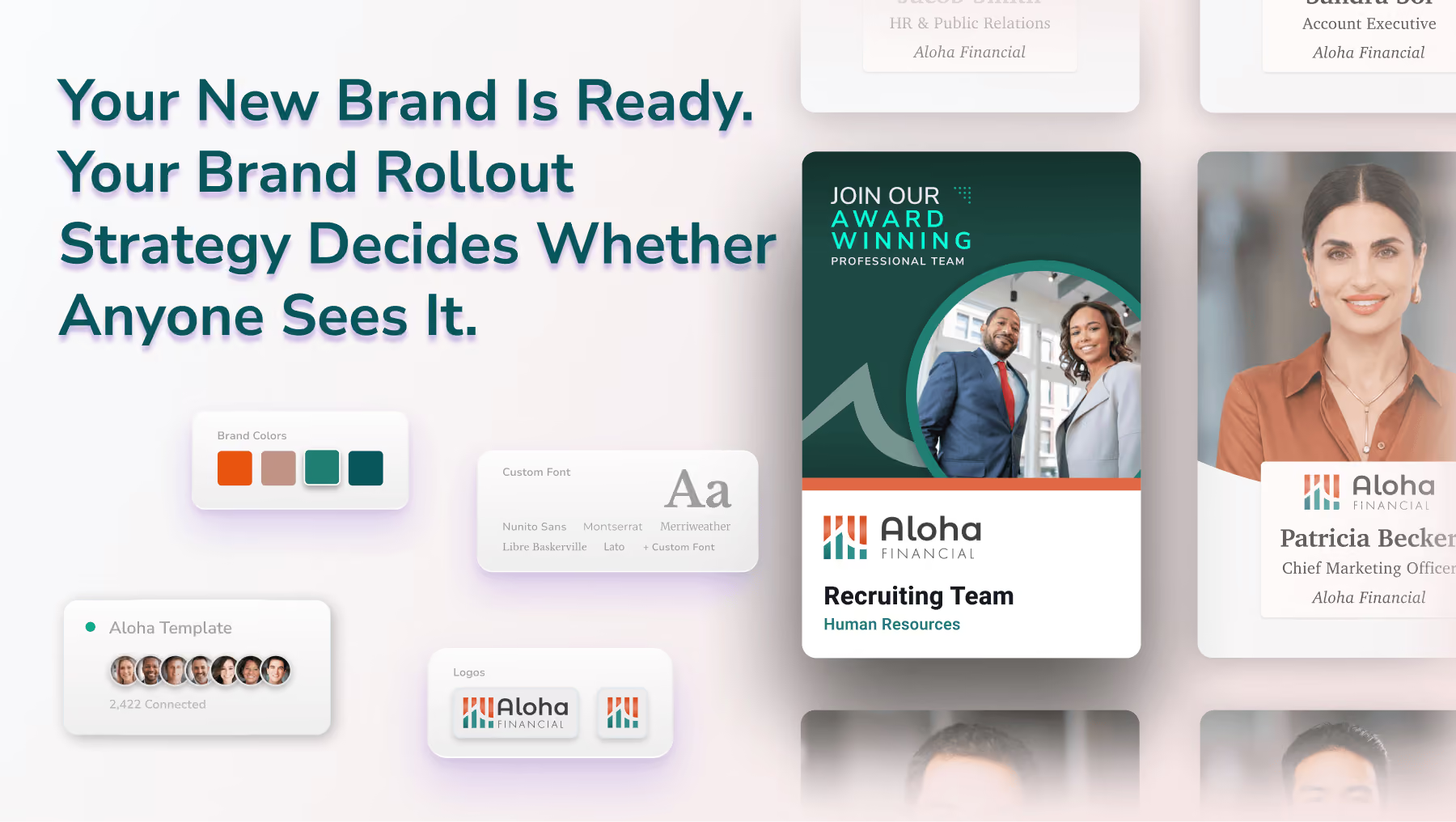
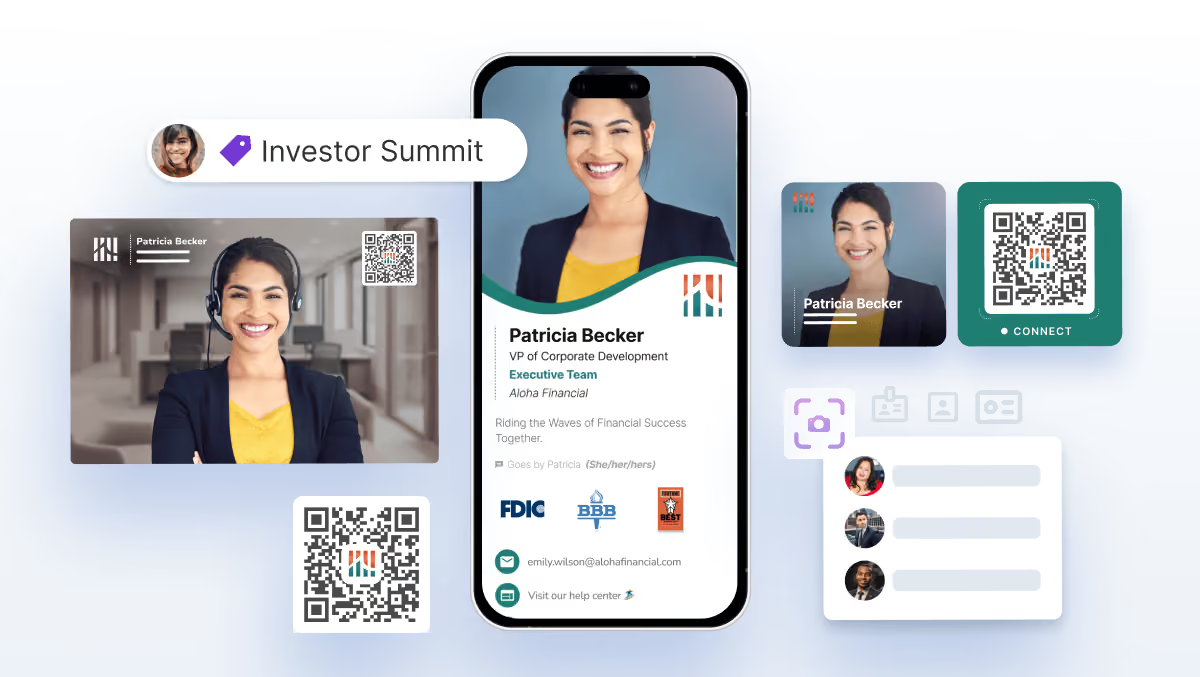
With a centralized template, marketing sets the new brand once and pushes it across the whole company in a single action. A change that would take weeks to chase person by person happens in minutes. Digital business cards update at the template level, so the first introduction after the announcement already carries the brand you just launched.
2. Automation: the rollout can't depend on 5,000 people doing a task
When every employee is responsible for updating their own card and signature, some do it immediately, many never do, and you have both the old and new brand in the market at the same time for months.
This is where the rollout stops being a marketing project and becomes an operational one. HiHello connects to the identity and HR systems you already run: Okta, Microsoft Entra ID, Workday, Google Workspace. Provisioning runs off your directory, so new hires show up on brand from minute one, and the new identity deploys without a manual list to maintain alongside it. The HRIS integration means your user list reflects the directory your HR team already keeps, not a separate one someone has to reconcile.
3. Proof: you need data on whether the new brand actually landed
Most companies have no data on professional presence at all, so "the rebrand went out" is an assumption, not a measurement. Card views, signature impressions, and reach by team turn the rollout into something you can report on.
Where the employee layer usually breaks
A few predictable failure points, and what to do about each surface:
Business cards.
A rebrand traditionally means re-designing, re-ordering, and re-distributing cards for the entire company, expensive and slow. An average 500-person company can spend $32,000+/year on printed cards. Digital cards remove the reprint cycle from the rollout entirely: update the template, and every card is current.
Email signatures.
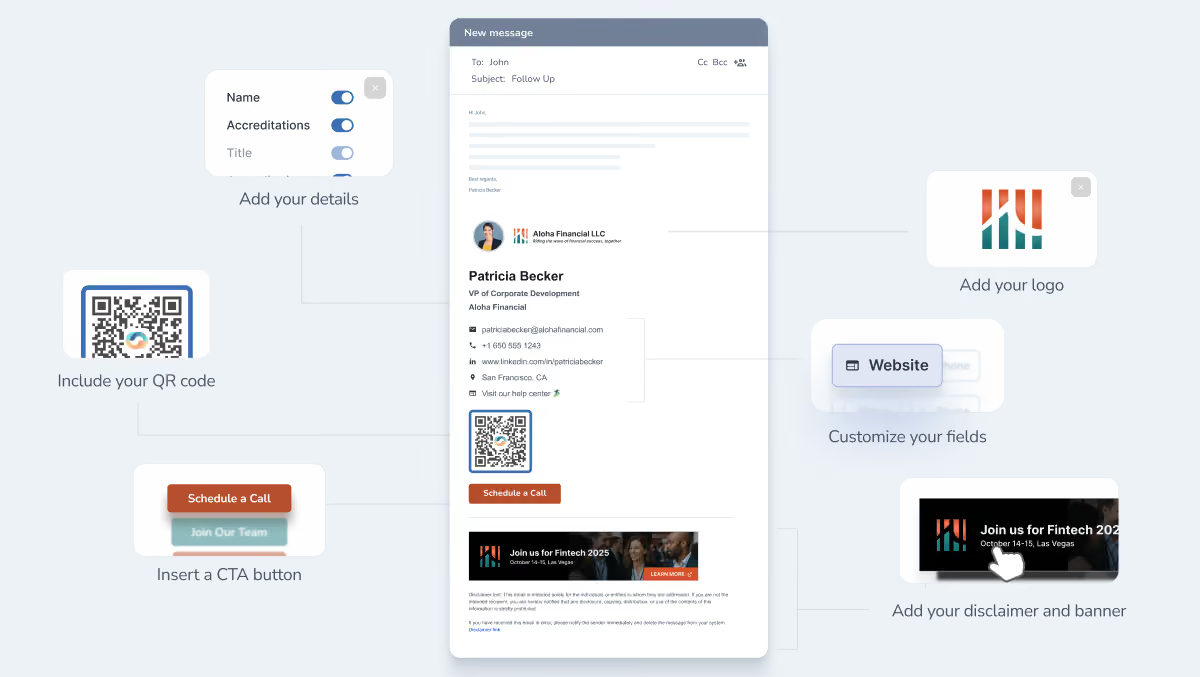
Signatures are the single most repeated brand impression a company makes, and the most likely to drift. Left to individuals, some inboxes carry the old logo for months. An email signature manager deploys the new signature across every inbox at once, controlled centrally, so every send after launch carries the current brand.
Video backgrounds.
Virtual meetings are still where a large share of first impressions happen. Branded backgrounds carry the new identity into every call on Zoom, Teams, and Meet, consistent across the company without anyone setting it up individually.
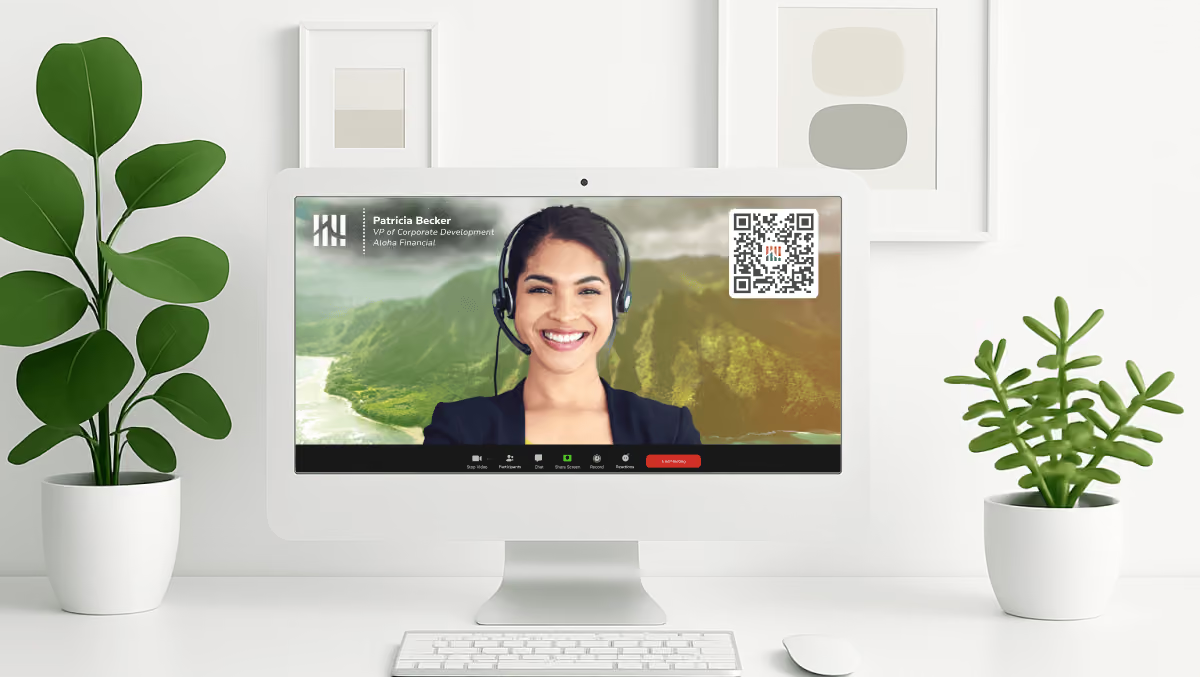
Contractors and acquired teams.
The people outside your core directory are the ones a directory-only rollout misses. Extending brand standards to contractors, franchises, or a newly acquired population, without adding them to your HRIS, is what keeps an M&A rollout from leaving half the combined company off-brand.
The sustainability bonus
A rebrand is a natural moment to retire paper. In a project all about how the brand is perceived, it's the perfect time to go green, and increasingly one buyers and customers notice. 88% of paper business cards are thrown away within a week of being handed out. Moving the card layer digital as part of the rebrand means the new brand launches without printing something most recipients discard.
The measured impact is real: in 2025, HiHello users saved 957 trees, conserved 382,751 gallons of water, and prevented 56,958 pounds of waste and 57,412 pounds of carbon emissions. Turn sustainability into the perfect value-add to your new brand story.
Once the new brand is live: from rollout to governance
A rollout is a moment. Holding the brand steady afterward is a permanent job, and it's a different one. The same centralized templates that pushed the rebrand out become the guardrails that keep it consistent as the org grows, people change roles, and new hires arrive.
That's the handoff: the rebrand is the change; brand governance is the steady state that protects it. If you're planning a rebrand, refresh, or M&A integration and want to see how the rollout mechanics fit your stack, modernize how your company shows up with a walkthrough of the full picture: provisioning, templates, deployment, and the analytics that prove it landed.
Frequently asked questions
How do you roll out a rebrand across thousands of employees quickly?
Set the new brand as a central template, connect it to your company directory, and deploy it across every employee's card, signature, and video background at once. Because the change happens at the template level rather than the individual level, a rollout that would take weeks of chasing individuals goes live in hours, and every employee's touchpoints update simultaneously.
How do you manage brand through a merger or acquisition?
M&A branding means two employee populations and one deadline to get the acquired company presenting under the parent brand. Connect the acquired company's directory, apply the parent brand's templates, and the new identity deploys across every card, signature, and background in that organization at once. Template segmentation lets you keep entities on different brand standards from a single admin view where the deal structure requires it, or unify them where it doesn't.
How do you provision employee brand profiles from Workday, Okta, or Entra ID?
HiHello connects directly to your existing HR and identity systems. When an employee is added to your directory, they're provisioned automatically with the current brand template and show up on brand from day one; when they leave, access is paused. The result is a user roster that reflects the directory HR already maintains, not a separate list to manage alongside it.
What can you actually measure after a rebrand?
Card views, shares, email signature impressions and clicks, and background views — broken down by team, location, or campaign. That baseline lets you show what the rebrand produced in reach and engagement instead of assuming it worked because the new logo went out.
How is a brand rollout with HiHello different from hiring a rebranding agency? An agency designs the new identity. HiHello deploys it. The two aren't competing: the agency delivers the logo, colors, and messaging, and HiHello is the mechanism that gets that identity live and consistent across every employee touchpoint on launch day. If you already have a new brand ready, this is the rollout layer, not the design layer.