.avif)
In every role I’ve held, from fast-paced agencies and scrappy startups to a global leader like Tesla, my North Star has been brand stewardship.
I’ve spent the better part of two decades in the marketing trenches. I’ve obsessed over the copy on a billboard, triple-checked the hex codes on a landing page, and fought for every pixel of brand equity. I’ve crafted meticulous strategies, knowing that execution would be top-notch.
Yet for years, one area of the brand experience remained a grueling, manual uphill battle. The moment my brand entered the 1:1 email environment via the humble corporate signature, I was forced into a management process that was as labor-intensive as it was frustrating.
There are millions of brand impressions hiding in your organization’s outbox every year. It’s time to stop leaving them to chance.
The Overlooked Brand Touchpoint
For those of us who live in the details, an email signature is a high-visibility touchpoint. I have spent countless hours across my career collaborating with designers, programmers, technical writers, and IT to ensure these assets reflect the caliber of the brands they represent.
However, maintaining that vision can be exhausting. It is a persistent frustration to see an intentionally designed brand experience lose its cohesion the moment it leaves marketing. What works when you have 50 employees quietly becomes a resource drain when you have 5,000. It leaves brand stewards trapped in a cycle of brand audits and course correction.
When Brand Consistency Breaks
I’ve seen the creative drift
Marketing distributes a polished template, only to find that within a week, the formatting has shifted, the font has been personalized, or a low-resolution graphic has been added.
I’ve experienced the broken promise
There is nothing quite like realizing, weeks into a major product launch, that a significant portion of the external-facing team is still using a signature link that leads to an outdated page, or worse, a 404 error. When we rely on manual updates, our brand real estate can quickly become out of date.
I’ve done the station audit
I’ve gone from desk to desk, manually implementing signatures across departments to ensure cohesion and double-check links, and I’m sure I’m not the only one. It’s a painstaking effort to protect a vision with manual tools; one destined to break the moment a new hire joins or a seasonal campaign shifts.
For too long, we’ve been trapped in a lose-lose scenario. This isn’t the fault of our colleagues; it is the result of an inadequate system that forced us to choose between two equally flawed paths:
- The IT Bottleneck: We work with IT to submit a ticket to force deployment. But because of technical silos and security risks, marketing is kept at arm’s length. We end up being able to update a banner a few times a year at best, which is entirely out of sync with the agility of a modern marketing team.
- The "DIY" Manual: We send an internal announcement with a multi-page PDF or a lengthy set of instructions coordinated with IT. We then spend additional time chasing compliance, correcting broken layouts, reinserting logos, and submitting more IT tickets. It is a manual workaround that wastes resources and drains efficiency.
Reclaiming Brand Impressions
For much of my career, I simply accepted this hurdle and worked around it. I viewed the email signature as a space we couldn't fully optimize because the technical barriers were too high. It was either locked down by IT or left to manual workarounds that were impossible to scale.
But once you remove the technical friction, the true value of this real estate becomes clear.
Research shows that 76% of recipients say a branded signature increases their trust in the sender, while 57% use it to judge a company’s legitimacy. But this is bigger than brand consistency; it’s about the fundamental metrics of reach.
I wanted to know how many impressions I was actually missing out on by not owning this space, so I did the math:
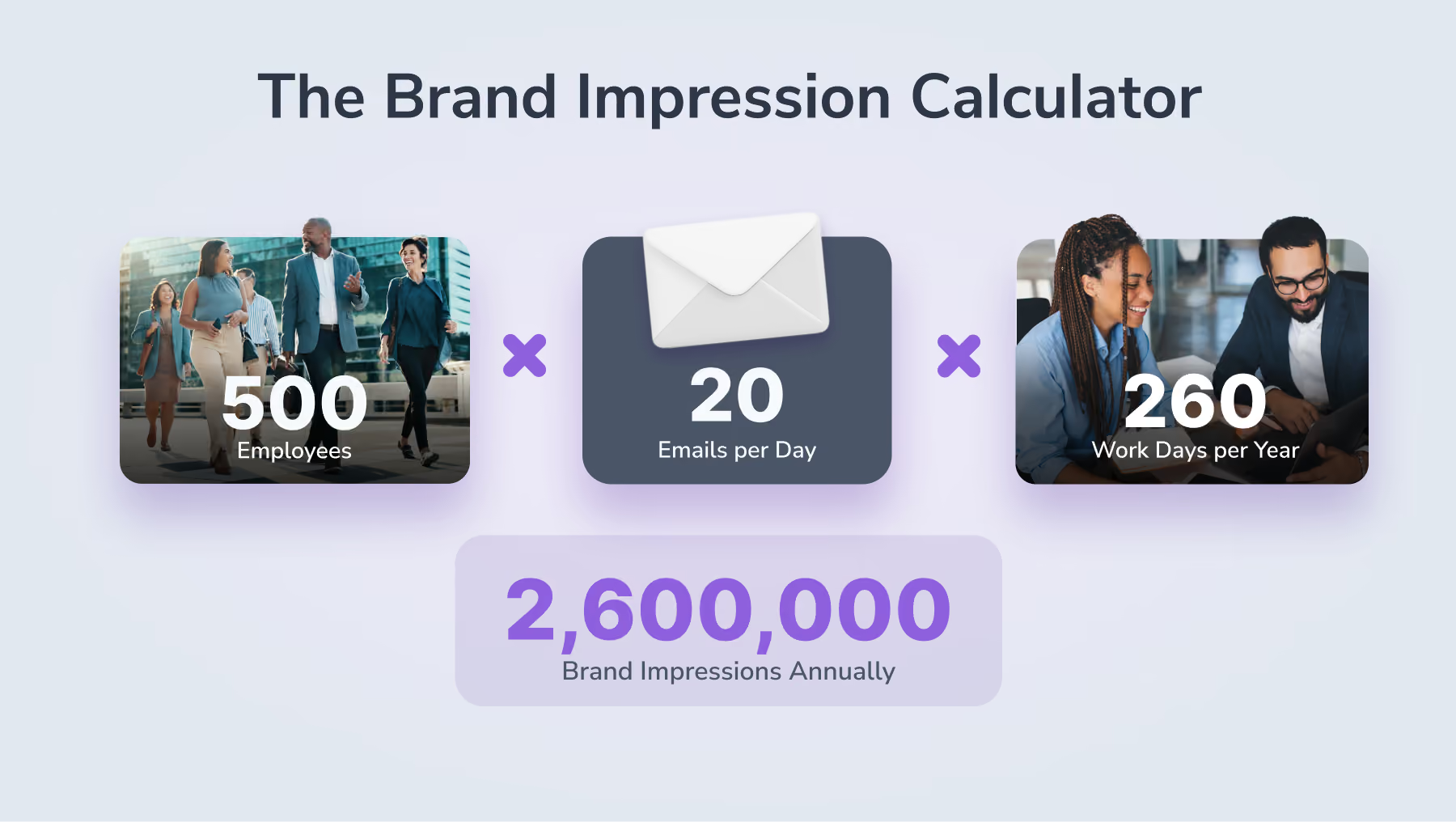
If I were to buy those same 2.6 million impressions via a standard LinkedIn campaign (with an average CPM of $33.80), it would cost over $85,000 per year. That is a tremendous amount of owned advertising value left to chance.
When marketing finally takes control of this space, the email signature evolves from a corporate footnote into an owned marketing channel. Imagine the precision of automated, department-specific banners and CTAs that pivot in real-time:
- Recruiting: HR team signatures automatically feature a "Join Our Team" banner during a hiring push, and then shift to “View Our Benefits” after resumes roll in.
- Sales: Signatures pivot to a "Book a Demo" CTA for the enterprise team while account managers highlight a new feature release.
- Global Marketing: Promotions rotate in perfect sync with your global campaign calendar, without a single employee having to "copy and paste" a thing.
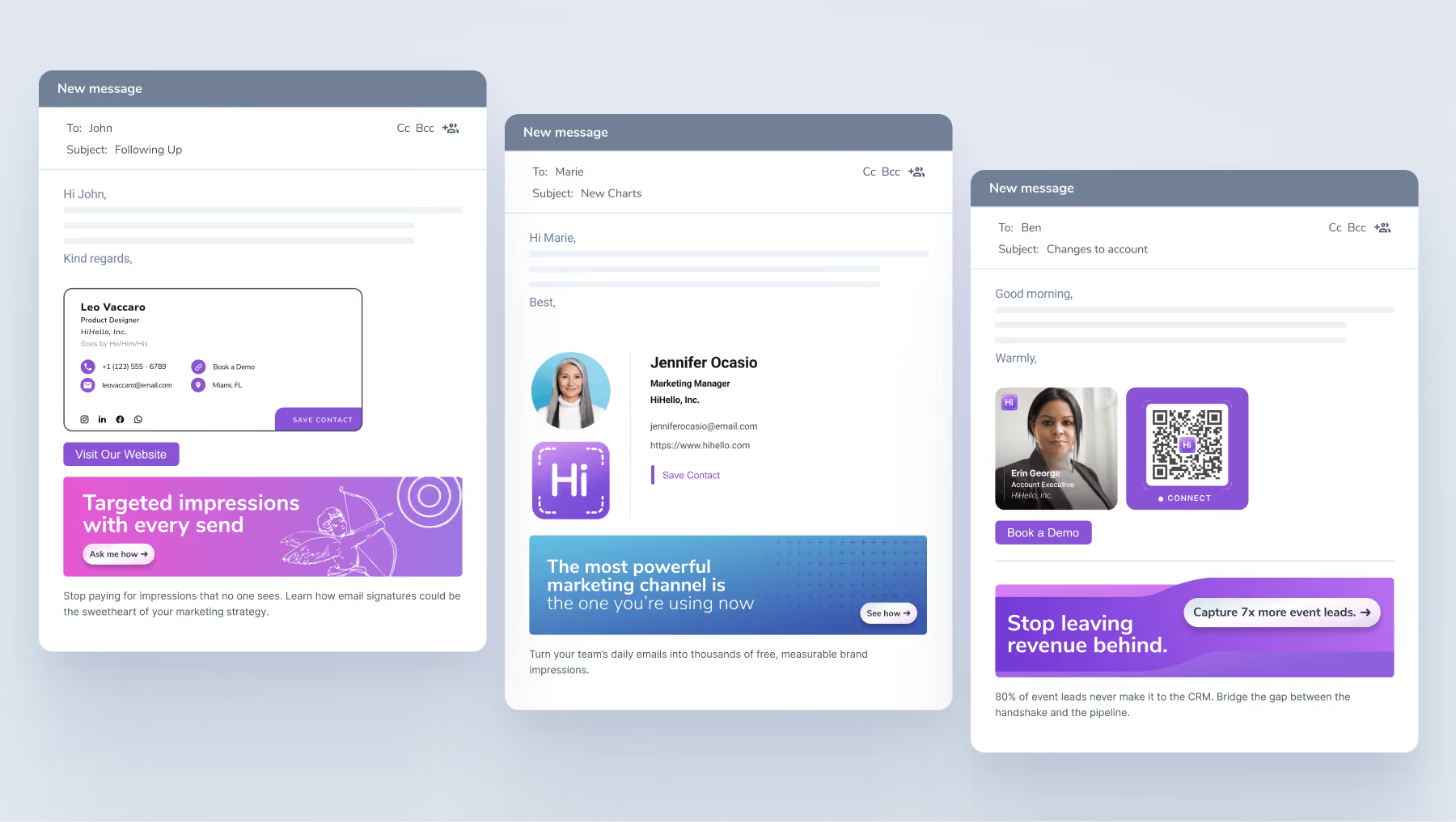
I’m proud to be part of a company that designed the solution to resolve this broken process. At HiHello, we’ve built a Professional Presence Platform that IT departments approve of, and frankly, love, because it seamlessly integrates with Google Workspace and Microsoft Outlook. By solving the security and deployment hurdles that previously kept our departments at odds, HiHello’s Email Signature Manager empowers marketing to take full control of this owned media space.
Marketers can now revitalize email signatures from a corporate footnote into an owned marketing channel that updates instantly, without a single employee having to copy or paste a thing.
We no longer have to settle for good enough or manual workarounds. We can move toward a future of seamless execution and finally claim the brand impressions our teams create with every send.