
Your team is in the conversations that move deals every day. The follow-up email, the badge scanned at a booth, the signature clicked three weeks before anyone filled out a form. The problem isn't that those interactions don't matter. It's that almost none of them make it into a system you can report from.
That's the gap this post is about: not whether your people are a channel, but how a marketing team actually operates one. How you capture what happens between people, attribute it to a source, and put it in the same reports as every other line in your budget.
The interactions driving pipeline aren't in is stack
Marketing attribution works on what it can see. A click, a session, a form fill. But the highest-trust interactions your company has with the market don't produce any of those signals. A conversation at a conference. A card handed across a table. Each one can source pipeline. None of them shows up in a dashboard built around tracked clicks.
Get the full story about those The Channel Missing From Your Marketing Dashboard in our other blog. The short version: what gets measured gets funded, and the channels hardest to attribute get quietly deprioritized until they fall off the roadmap. This post picks up where that one ends. If the interactions are already happening, how does a marketing team capture and report on them?
Capture the interaction at the source
You can't attribute what you never recorded. The fix isn't a better reporting layer on top of the same missing data. It's capturing the interaction at the moment it happens, before the detail fades and the follow-up window closes.
HiHello turns each interaction into a structured record as it occurs. A shared digital business card becomes a timestamped touch, tagged to the person who made the connection. A scanned paper card or event badge becomes a clean contact instead of a pile to sort through later. A custom lead form collects exactly the fields your team needs, with consent built in. For the mechanics of capturing the right data at the booth or in the field, Smarter Lead Capture for Teams covers the setup in detail.
Attribute it to a source, automatically
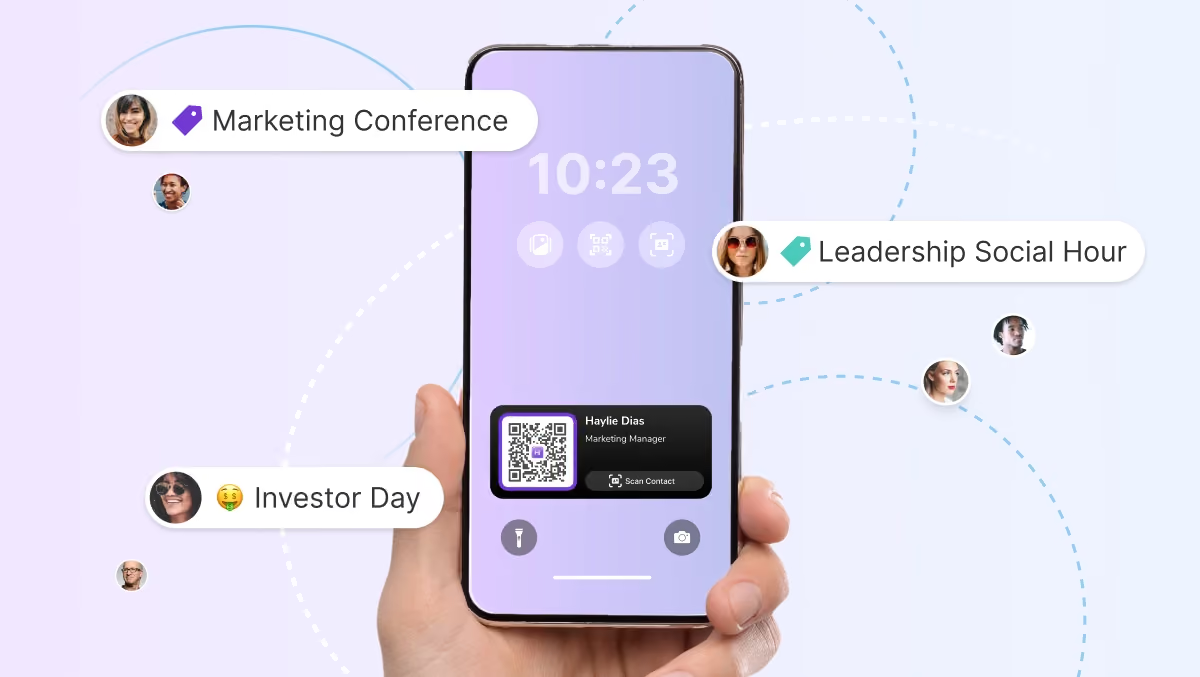
Capture only matters if the origin travels with the record. Every card share, scan, and form submission is tagged at the moment of capture: the event it came from, the campaign running at the time, and the team member who made the connection. That tag stays attached as the contact syncs to Salesforce, HubSpot, Microsoft Dynamics, or whatever CRM your team uses.
When that contact later shows up in a pipeline stage, you have a traceable line from the conversation that started it to the revenue it contributed. The attribution isn't reconstructed from memory or a post-event spreadsheet. It exists because the interaction was recorded with its source intact in the first place. That's the operational difference between attributing in-person pipeline and estimating it.
Report on presence like a channel
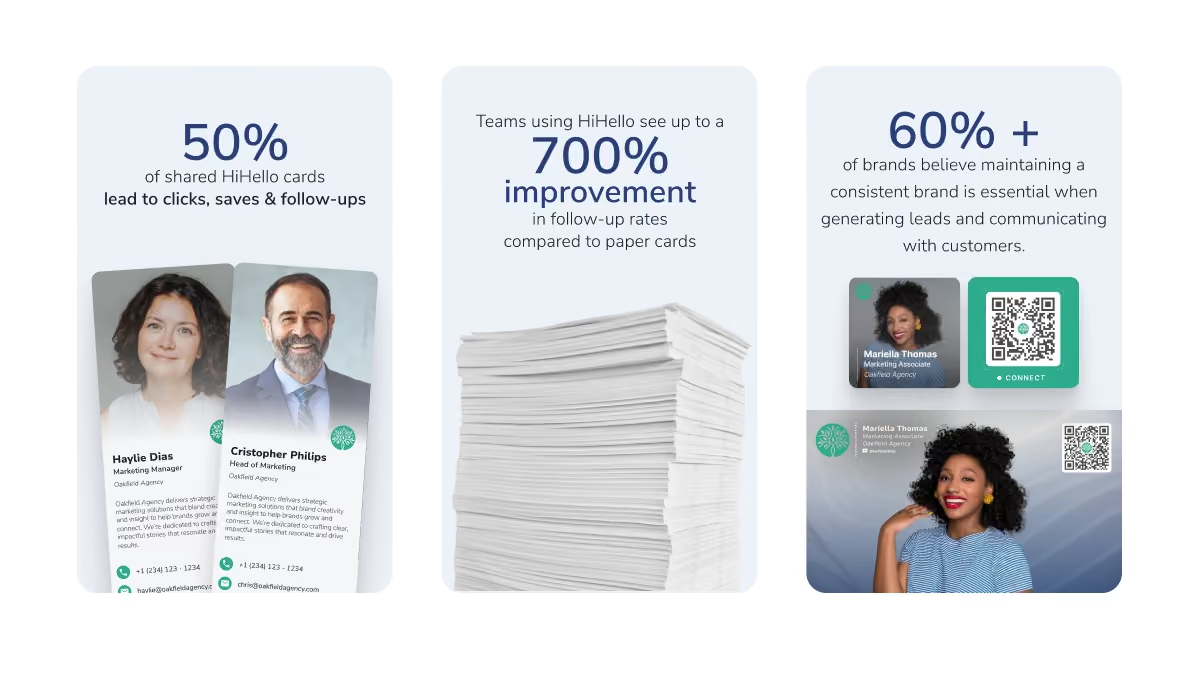
Once interactions land in your CRM as tagged records, presence stops being invisible and starts behaving like any other channel you manage. In 2025, HiHello users generated 1.32 billion impressions across owned channels, from email signatures and virtual backgrounds alone, and 19.1 million card views. Reach that companies already owned, now measured.
Analytics show what that surface area is driving: card views, signature impressions, contacts made, and the pipeline those interactions fed. You can break it down by team, campaign, or event and feed it into the reporting your team already runs. The goal isn't a separate dashboard for presence. It's presence sitting in the same report as paid, email, and events, measured the same way.
Run your owned surface as marketing real estate
The same records that close the attribution gap also open a channel most companies leave idle. Every employee email, every card, every video call is reach you already own and already pay for. A 500-person team sends millions of emails a year, each one an impression reaching someone your company already has a relationship with.
HiHello lets marketing run that surface as a managed channel: a campaign banner under every signature, updated across the whole company in hours, not weeks. A product launch, a promo, an event invite, deployed centrally and measured by impressions and clicks. Rising paid costs make the reach you already own the most efficient inventory you have. It just has to be activated and tracked instead of set once and forgotten.

Keep the brand consistent while you do it
None of this works if every employee is the execution layer. When individuals manage their own cards and signatures, some update promptly, many never do, and the brand drifts. HiHello removes the individual as the point of control. Marketing sets templates once, locks the fields that shouldn't change, and every card, signature, and background pulls from that source. Provisioning runs off your existing directory, so new hires are on brand from day one.
The result is a channel that's consistent by default and reportable by design. Your team shows up the same way everywhere, and every one of those touchpoints becomes a record you can trace.

Getting started
If your pipeline reporting has a blind spot where your people should be, the fix is to start capturing those interactions before they disappear. Close the attribution gap across every channel your buyers touch, then report on presence like the channel it already is. See how it works on the HiHello analytics page, or schedule a demo to talk through what this looks like for your team.
Frequently Asked Questions
How do marketing teams attribute pipeline from offline interactions?
By capturing the interaction at the source. Every card share, badge scan, and form submission becomes a timestamped record tagged to its event, campaign, and the person who made the connection, then syncs to your CRM with that origin intact. When the contact reaches a pipeline stage, it's traceable back to the interaction that started it rather than estimated after the fact.
Which CRMs and marketing tools does HiHello sync with?
HiHello integrates with Salesforce, HubSpot, and Microsoft Dynamics, and connects to marketing automation tools your team already runs. Every captured interaction syncs as a tagged record, so it lands as attributable data instead of a raw import someone has to reconcile later.
How do you report on email signatures and cards as a marketing channel?
Analytics track impressions, views, clicks, and contacts made across signatures, cards, and virtual backgrounds, broken down by team, campaign, or region. Those metrics feed into your existing reporting, so presence shows up alongside paid, email, and events, measured the same way.
What is marketing-sourced pipeline from channels that don't produce clicks?
It's pipeline that originated in an interaction with no digital click to track: a conference conversation, a card share, a signature clicked weeks before a form fill. It becomes measurable when the interaction is captured with a source tag at the moment it happens, turning it into a first-touch record your pipeline reporting can include.
How is this different from marketing attribution software?
Attribution software reports on what happens after a buyer enters a tracked digital funnel. HiHello operates one layer earlier, capturing the human interaction before it can disappear into the gap between a conversation and your CRM. It doesn't replace your attribution layer. It gives that layer something to work with when the interaction happens offline.