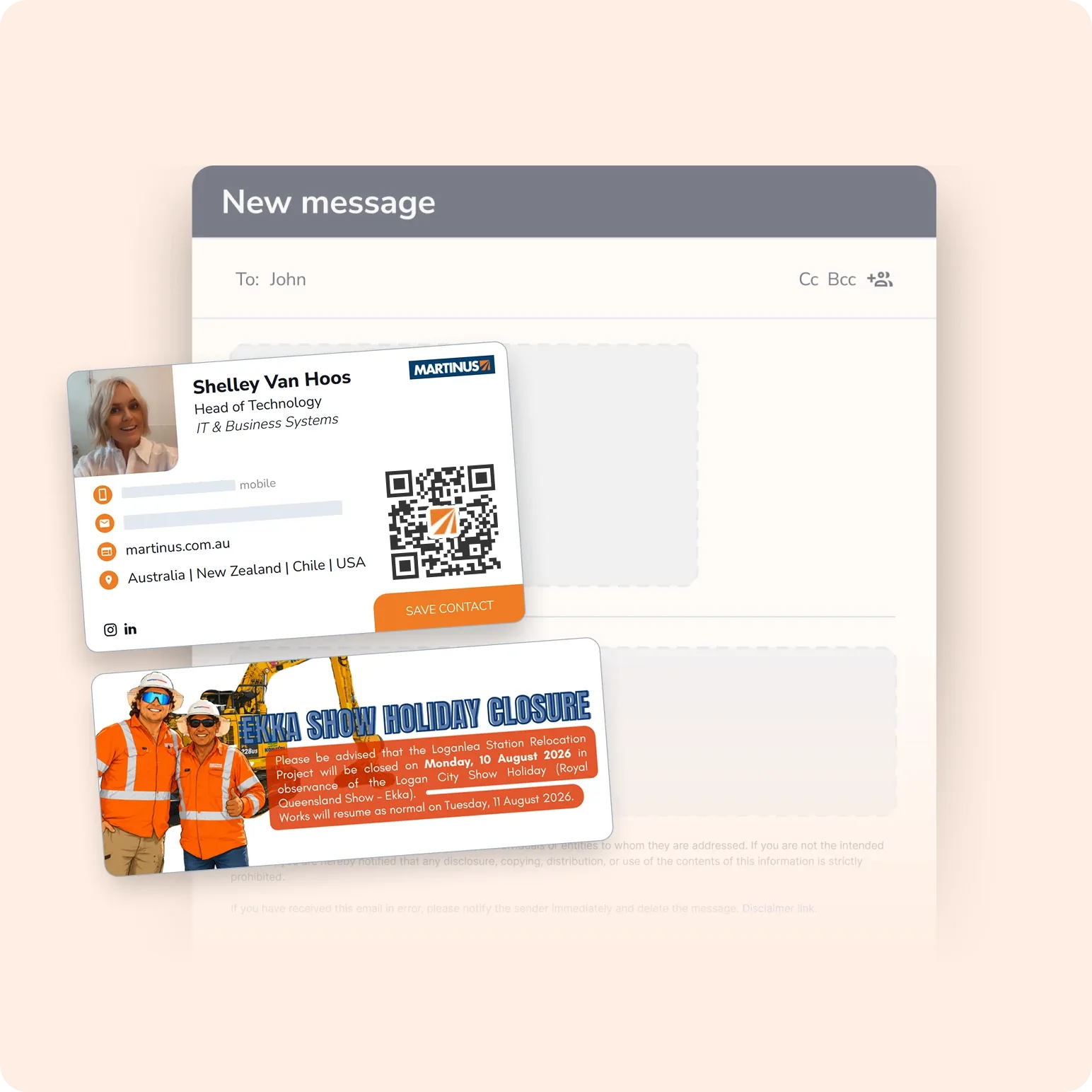
Martinus Group started 20 years ago as a one-person operation run out of its CEO’s garage. Two decades later, it is a globally trusted principal contractor on major rail and infrastructure projects, with teams spread across Australia, New Zealand, Chile, and the U.S. Because it’s a project-based construction business, its workforce can nearly double in a matter of months as new projects ramp up.
That growth exposed a problem Shelley Van Hoos, Global Head of Digital & Technology Strategy at Martinus, had been managing manually for years: with every new employee, signature change, banner update or promotion that was requested, the manual process ran through the Technology team directly to manage.
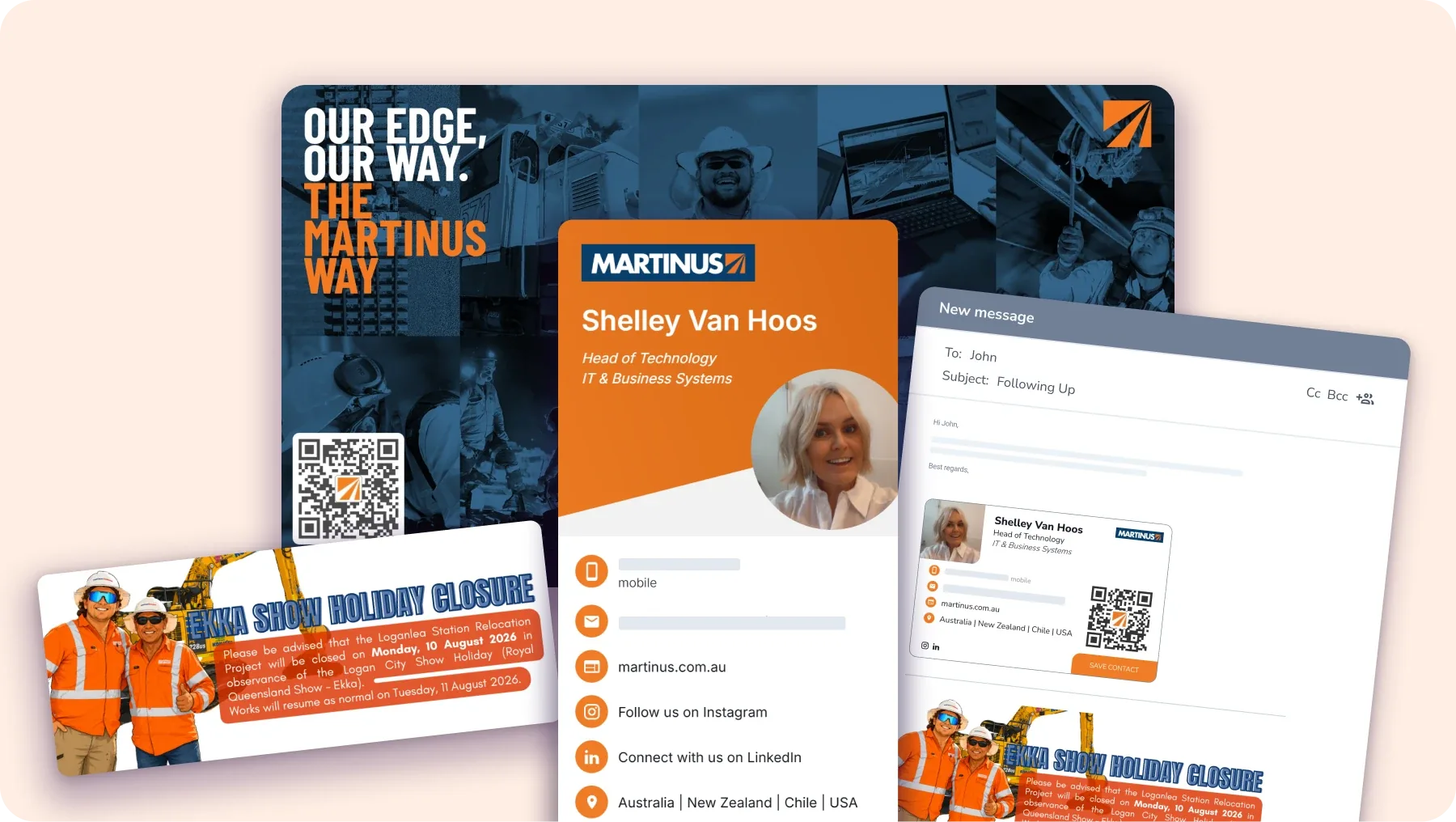
“Our marketing team would design it and email it to the Technology team who would then send a global email explaining how to update their signatures in Outlook.”

Employees were expected to copy and paste new templates into Outlook themselves, with predictably inconsistent results.
The bigger risk was brand control. Without a locked, centrally managed signature, many employees built their own, resulting in mismatched and off brand fonts, skewed logos and even job titles occasionally being rewritten! And with hundreds of people rotating on and off projects at a time, manually onboarding and offboarding every signature was consuming real hours every week.
For Shelley, evaluating any vendor starts with the question, “What problem are we trying to solve, will this solution address it, and can this vendor provide close to one-on-one support and guidance?"
"The HiHello team have continuously proven this to be true and have jumped in to solve any issues quickly. This is true from the first email exchange through to today almost 4 years on.”
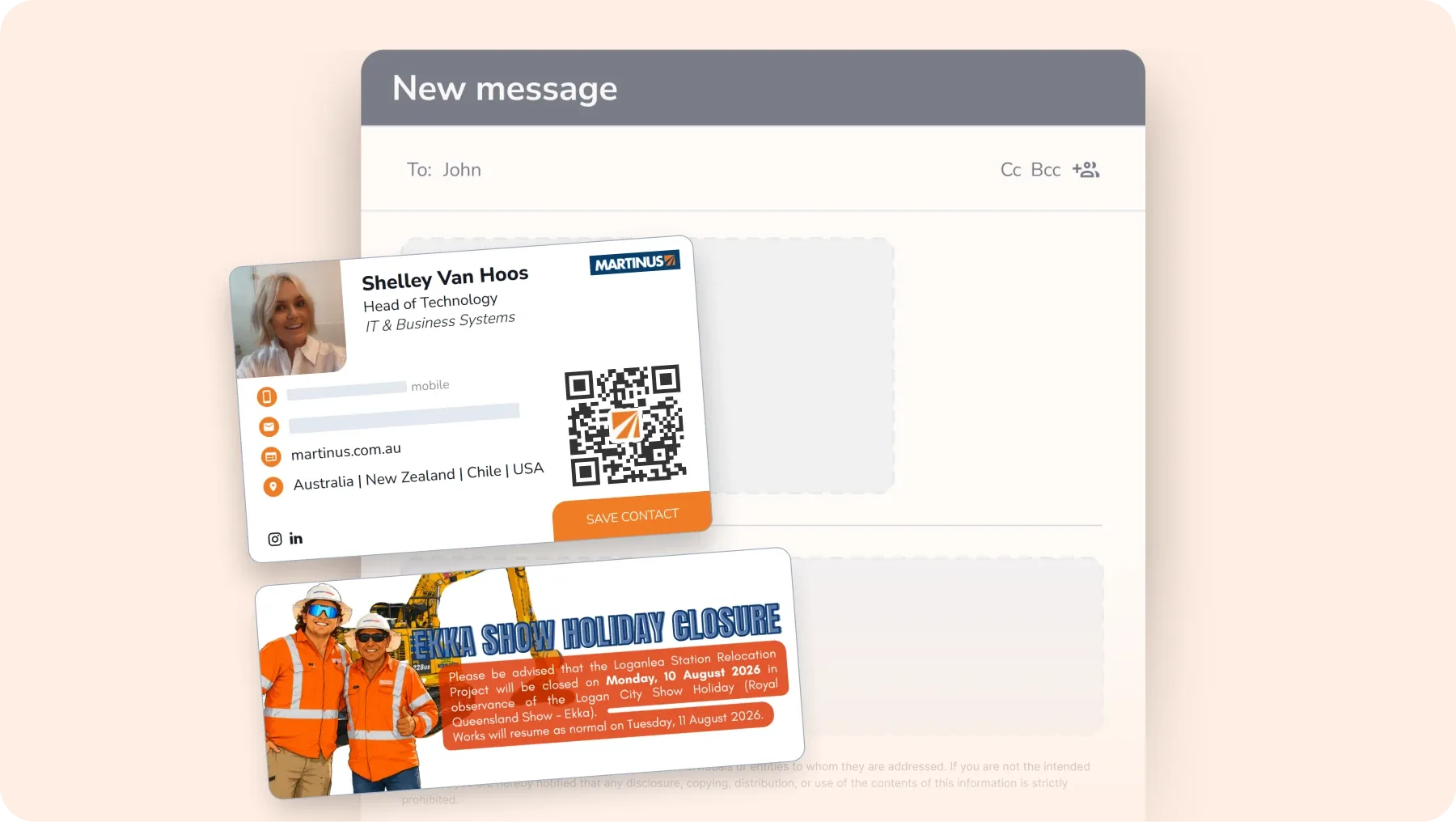
Martinus initially came to HiHello to standardize signatures instead of relying on Outlook. Digital business cards came along as a bonus. The early rollout was manual: Shelley’s team had to copy templates from the platform and email them out to employees one wave at a time. What’s changed since then is what made the platform stick:
“We’ve definitely been on the journey with the HiHello team from the start, and have seen many of our original feature requests come to fruition as well as great automations. These have been huge for us from on/offboarding perspective and has literally saved 100s hours per year.”
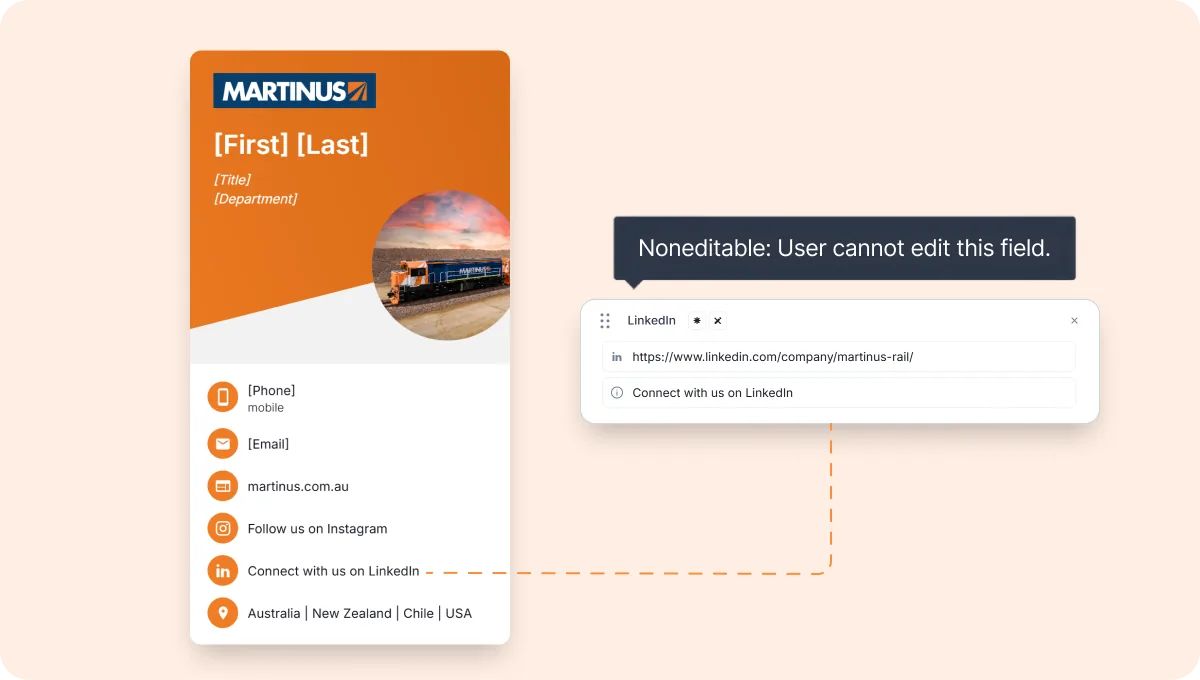
Signatures at Martinus are no longer optional or self-styled. If an employee’s signature falls out of sync or someone builds their own version, Shelley simply turns the managed template back on.
“Every so often I come across a random off brand signature and think ‘how did that slip through the cracks?’ So we just go in and turn on the auto signature sync which overwrites any other signatures, and that’s it!”
Because Martinus does a lot of self-delivery work, its headcount doesn’t move gradually. It can jump from a static 500 employees in Australia to 1,000 as a project ramps up, then back down again over the life of a 12-month build. The Entra ID integration means a new signature is provisioned automatically the moment someone is set up, with no manual step from Shelley’s team:
“It’s not one or two people starting every month. I’m talking about hundreds of people at times. So the onboarding and offboarding automation via Entra is significant for us.”
The same Entra connection has become a data-quality checkpoint: because a new hire’s title and phone number flow straight into their signature, Shelley’s onboarding team now treats getting that data right on day one as non-negotiable.
“From day one, the new employee’s signature including all details are accurate.”
Once the core signature was automated, Martinus’ team started using scheduled signature promotions for far more than branding. With project teams spread across Australian states and cities that each observe different public holidays, Shelley now schedules region-specific banners in the two weeks ahead of a local public holiday, letting clients and contractors know a project team won’t be available.
“We had a public holiday for people who live in our capital city of Brisbane. So we created a scheduled promotion for the project teams, just for the two weeks leading up to it, notifying that no one would be available. That’s been handy for a lot of our client and contractor-facing communications. Once the promotion expires there’s no need for us to go and remove or turn off the localised banners.”
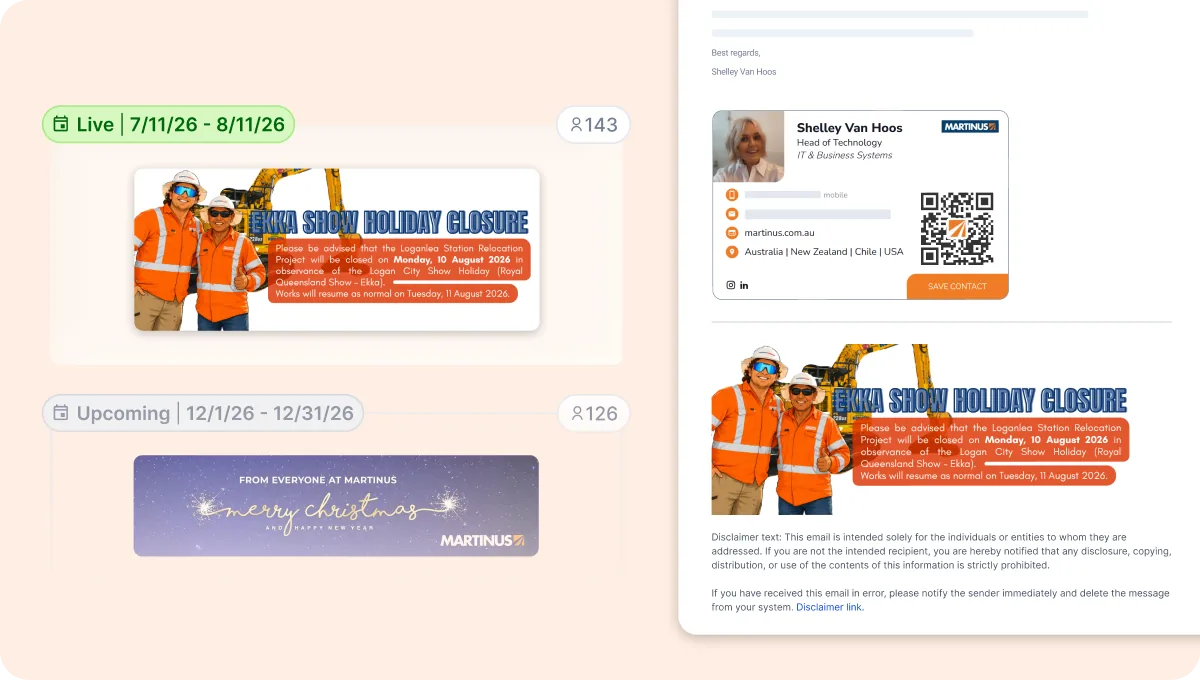
The same tool carries R U OK? Day, Australia’s national mental health awareness campaign, across Australian templates, and rotates in seasonal promotions like Christmas messaging. Because segmentation runs by template and team, Martinus also runs a second brand entirely through the platform: Salix Products, a sister company under the same group that attends its own conventions and needs its own promotional calendar, alongside a separate U.S. team template.
“The ability to be able to turn things off and on depending on the geolocations or the different types of teams or events coming up, that has been a game changer over the last couple of months.”
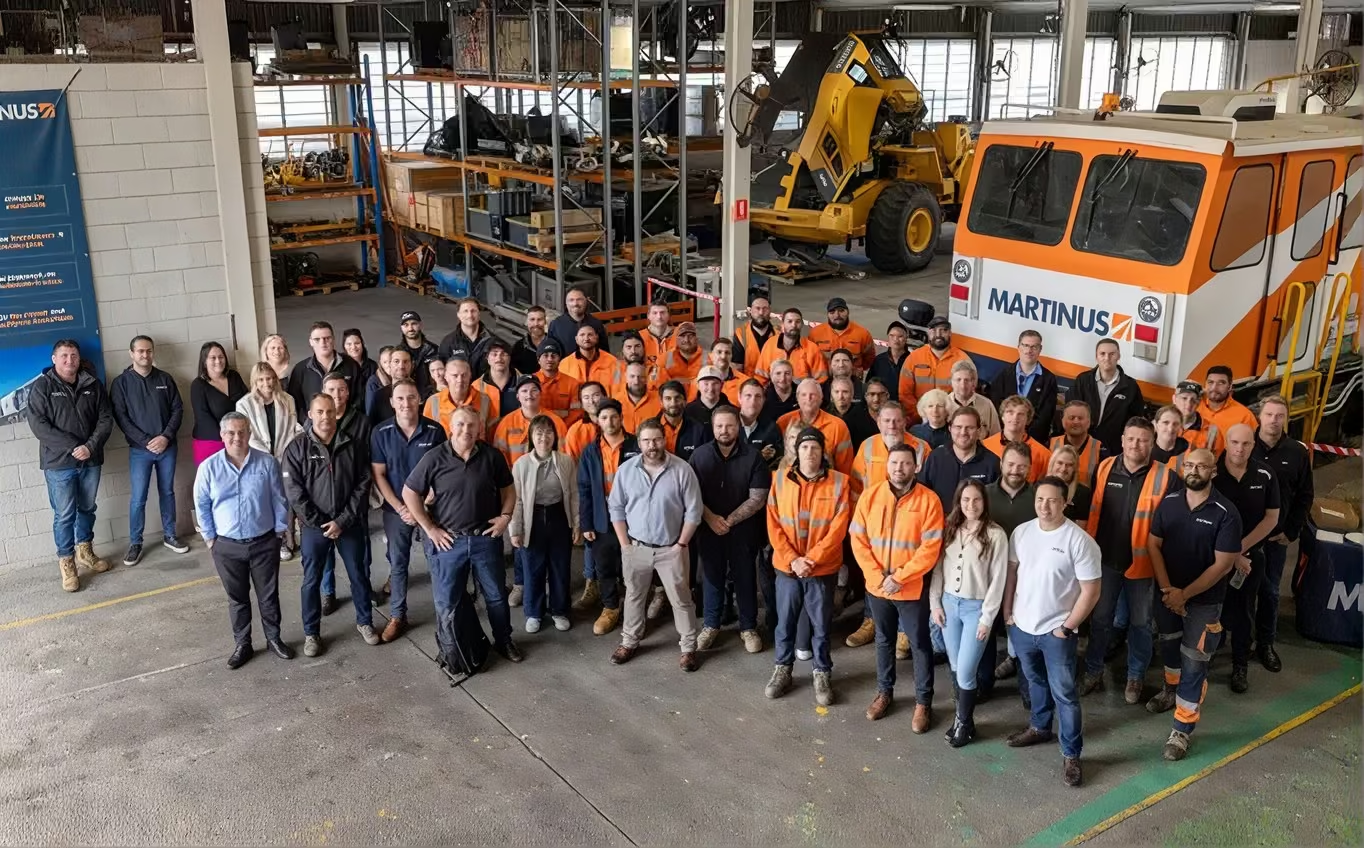
Martinus Group is an Australian-owned, now global rail construction company that started 20 years ago in its CEO’s garage as a one-man band. Most of the growth has come in the last six to eight years, taking the company from one person to roughly 2,000 people globally, along with major new projects around the world. It is now one of the most trusted principal contractors in Australia, including to government clients.
Martinus is deliberately built to move quickly, without red tape or slow decisions. Anyone in the business is empowered to do what they think is best for the business. As Shelley puts it: if you think something can be done better, cooler, or faster, just do it. There are no silos; it operates as a team of teams. HiHello is another example of using new tools to put the company out there and stay a little bit cutting edge.
Martinus can see the signature program working directly in its own traffic data: the majority of all views on employees’ digital cards come through the email signature itself, not through separate card shares. That volume is on top of the time savings Shelley’s team has gained from no longer manually pushing templates, chasing down rogue signatures, or hand-processing onboarding and offboarding for every new hire.
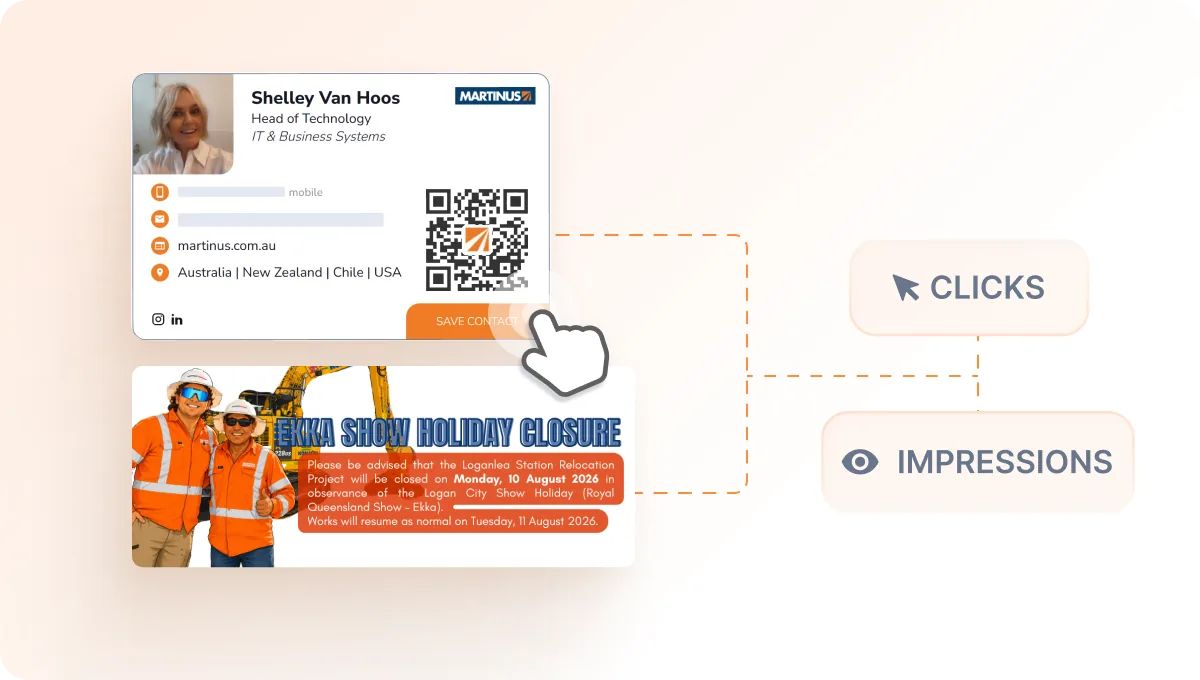
HiHello is also rolling out dedicated email signature analytics, click-and-view level reporting on individual banners and promotions, which Shelley will be able to use to see exactly which regional campaigns and promotions are landing, rather than relying on overall card traffic as a proxy.
As Martinus’ footprint continues to expand beyond Australia, Shelley is planning to split out dedicated templates for the Chile and New Zealand teams, which currently share an Australian template and can’t cleanly carry region-specific public holiday or promotional content. She’s also looking to bring the small internal marketing team more directly into the promotions calendar, giving them a standing process to flag upcoming campaigns and events. This way, Shelley’s team can schedule the signature promotions around them, rather than the two working ad hoc.